What a brand reputation audit should actually contain
A brand reputation audit covers twelve months measured monthly, splits who is doing the talking three ways and avoids any percentage nobody can defend.
Most brands find out about their reputation when something goes wrong. A brand reputation audit is the cheaper version of that discovery.
What an audit answers that monitoring does not
Monitoring tells you what is happening now. An audit tells you what has been true for the last year. Volume trend, who talks about you, what they say when they do, how you compare with competitors and whether any of it is changing direction.
It is a periodic exercise, usually annual or before something significant: a funding round, a rebrand, a new market.
Tell us what is coming up and we will scope the audit around it.
Set the period long enough to see a trend
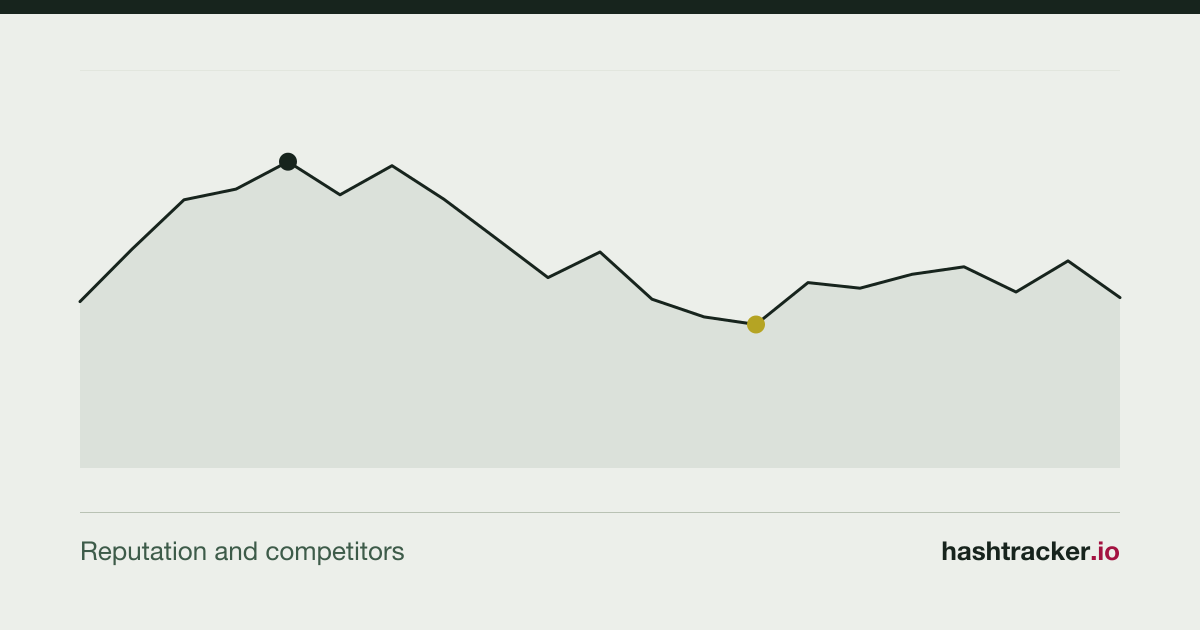
Twelve months, measured monthly. Shorter and you are looking at noise; longer and the market has changed underneath you. The monthly breakdown matters more than the total. A brand with flat annual volume that has been declining every month since March has a problem the annual figure hides completely.
Who is doing the talking
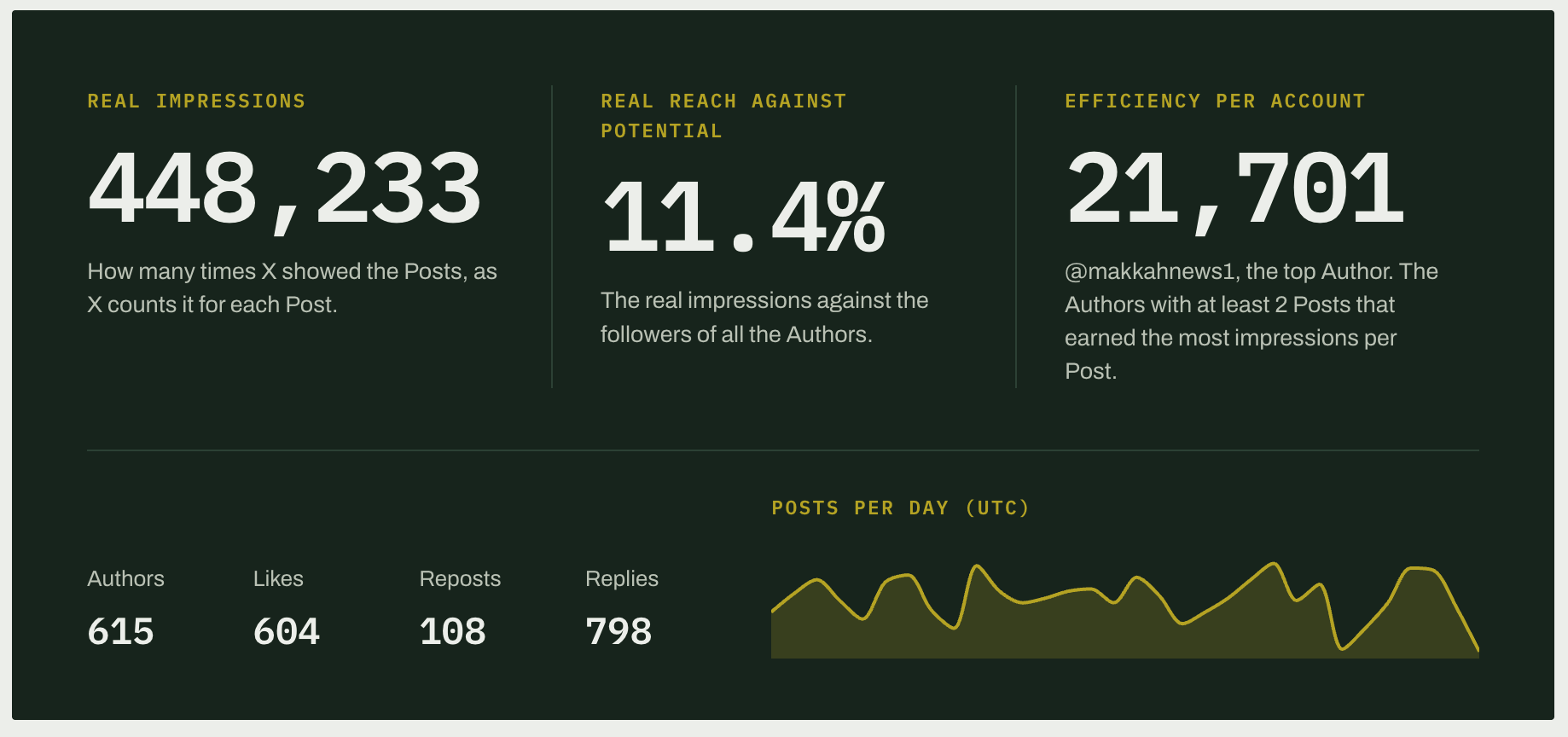
Split mention volume three ways: your own account, accounts you have a relationship with, and everyone else. A brand where most mentions come from itself and its partners has not built an audience, it has built a distribution list. That distinction rarely shows up until someone splits it.
Then look at the concentration. If fifteen accounts produce half your mentions, your reputation is fifteen relationships, and losing two of them is a measurable event.
What is said, without pretending to read minds
Instead of relying on sentiment scores that require interpretation, Hash Tracker focuses on measurable patterns within the conversation. It sees the balance between original posts and replies, it also identifies posts containing links that may point to press coverage or external content. Discover recurring words and phrases based on how often they actually appear.
These simple structural indicators reveal the character of a conversation without relying on a model that might misinterpret it.
Benchmarking without flattering yourself
Pick the competitor set according to a clear and consistent rule, and state that rule explicitly so the analysis remains transparent and objective. Once the competitors have been identified, measure all of them using exactly the same criteria and over the same twelve-month period. This ensures that the comparison is fair and that the results are based on comparable data.
Report share by volume and share by reach separately. Share by volume shows how much of the overall conversation each competitor generates, while share by reach shows how widely that conversation is potentially seen and distributed. These two measures can often tell very different stories.
A competitor may generate a large number of posts and discussions but reach a relatively small audience. Another may generate fewer posts but achieve significantly greater reach through a smaller number of highly visible or influential posts.
The difference between volume and reach is therefore often one of the most valuable findings in the entire analysis. It can reveal which competitors are driving conversation, which ones are achieving visibility, and where there may be opportunities or gaps in the market.
What the audit should end with
Three things matter most: what changed over the year, what is driving those changes, and what to watch each month from now on. Looking at these three areas provides a clearer understanding of how the conversation has evolved, which factors are influencing it, and where potential changes or opportunities may emerge.
That last step turns a one-off audit into an ongoing monitoring setup. By establishing a clear baseline from the previous twelve months, monthly changes can be measured against something meaningful. This makes it easier to identify significant shifts, set relevant thresholds, and know when a change in the data actually requires attention.
Everything we gather stays within the Twitter compliance rules and the dataset comes with the report. Tell us the brand and the competitors and we will put it together.