Brand reputation monitoring works before anything happens
Brand reputation monitoring is worth most as a baseline taken while nothing is wrong. Four numbers, a frozen query and a quarterly reading beat any crisis dashboard.
Brand reputation monitoring is usually bought during an incident and abandoned three months later. That is the wrong order, because the value of the measurement comes almost entirely from having taken it before anything happened.
Without a baseline, every number after an incident is unreadable.
Tell us what you need to measure and we will set the baseline up now, not later.
Tell us what you need to measure
A baseline is four numbers, not a dashboard
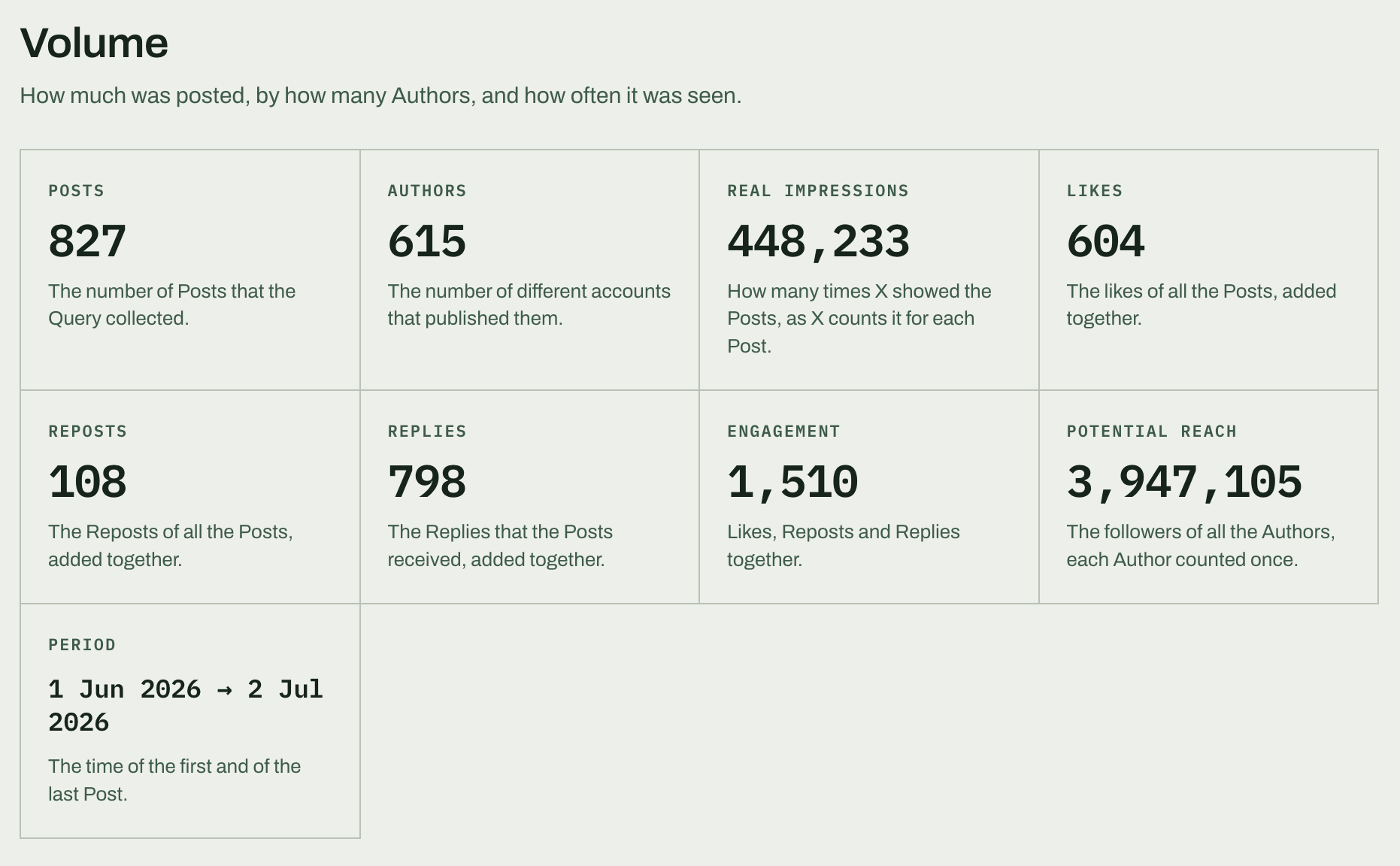
You need mentions, reach, participating accounts and the recurring vocabulary around the brand, for a normal month. That is enough to tell later whether something is unusual. It does not need to be elaborate. Anything more turns into a project nobody maintains, and an abandoned monitoring programme is worse than a simple one that ran every quarter without fail.
Measure the range, not the average
One normal month is not a baseline, because months vary a great deal on their own. Take three or four and record the spread: the low, the high and the typical.
The range is what makes a later reading interpretable. A month at twice the average sounds alarming until you know the normal range already reaches that, which is frequently the case for brands with any seasonality at all.
Keep the query frozen
The single thing that ruins a long series is quietly changing what is being counted. Adding a product name, excluding reposts, switching sources: each is reasonable on its own and each breaks comparability with everything before it.
Write the query down and reuse it exactly. When it genuinely has to change, run both versions for one period so the step can be measured, then say in the report which period the change took effect.
Watch the composition, not just the total
A flat total can hide a complete change underneath. The same number of mentions can come from a different set of accounts, in a different language mix, about a different topic.
Track who is talking and what they are talking about alongside the volume. Composition usually shifts before the total does, which is what makes continuous measurement worth more than a reading taken when someone gets worried.
Quarterly is enough for most brands
Continuous does not mean constant. A quarterly reading with a consistent method gives you a usable series and takes a few hours a year. Monthly makes sense for brands with genuine volume or an active risk profile. Weekly makes sense only during an event. The cadence matters far less than never skipping one, because a series with gaps loses most of its value at exactly the moment it is needed.
Write down what would count as abnormal
Decide in advance what triggers a closer look: volume above the top of the range, a single post above a reach threshold, a new term appearing in a share of mentions.
Deciding this while nothing is happening produces a much better threshold than deciding it at nine on a Monday morning. It also means an alert is a fact rather than an argument about whether the thing is serious.
Keep the readings where someone can find them
A series stored in one person's folder stops existing when that person changes job. This is how organisations end up buying monitoring twice. File each reading in the same place, named by period, with its query attached. It costs nothing at the time and it is the difference between having three years of history and starting again with a new baseline every eighteen months.
The reason to keep going when nothing happens
Most quarters, the report says nothing changed. That is not a wasted report; it is the data that makes the interesting one legible, and it is the reason anyone will believe the interesting one.
Everything we collect stays within the Twitter compliance rules and every reading ships with its query, its period and the underlying rows, so the series can be audited end to end. See the plans or tell us what to measure.