How few accounts carry half of everything anybody saw
The totals describe the crowd. Concentration describes who actually carried the conversation, and it is the figure that changes what you do next.
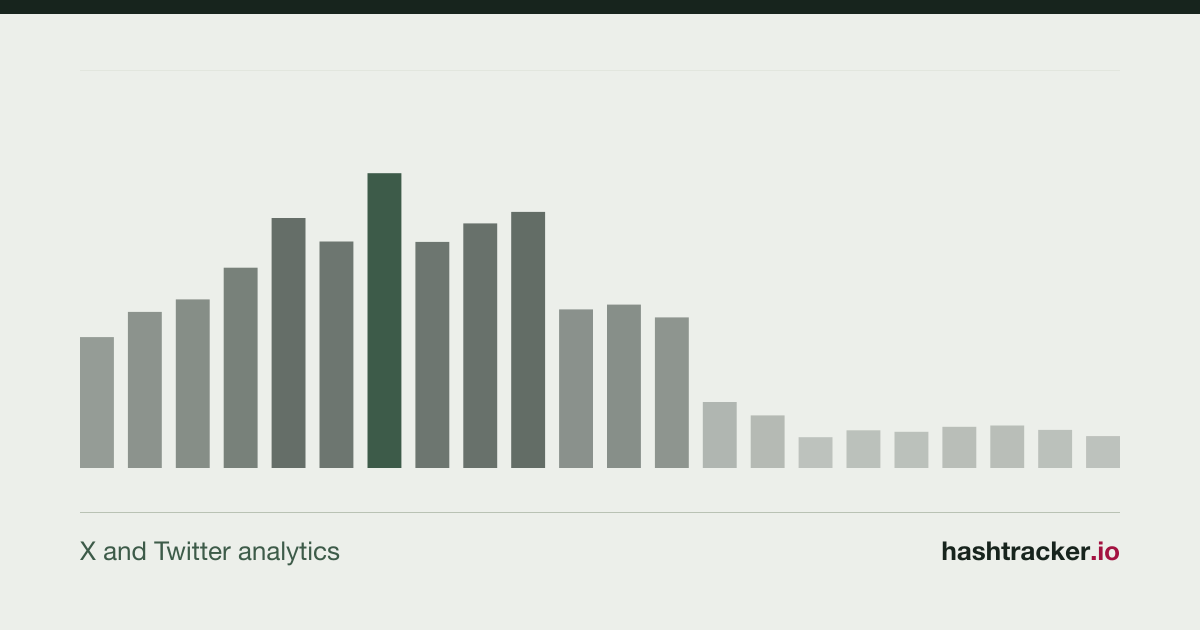
Most reports about a hashtag answer the wrong question first. They say how many tweets there were and how many accounts took part, which sounds like a description of the conversation and is closer to a description of the crowd.
The question that changes a decision is different. Of all those accounts, how few carried most of it.
The number to look for
Count the accounts from the top by impressions, adding as you go, and stop when you have passed half of all the impressions. That count is the answer. In a conversation of six hundred accounts it is often fewer than twenty.
It is a plain calculation on the export, nothing modelled: group the rows by account, sum the impressions of each, sort, and count until the running total reaches half.
Why it matters more than the totals
Two conversations of forty thousand tweets can be opposite things. In one, four hundred accounts each brought a piece. In the other, eleven accounts brought most of it and everybody else was talking to themselves.
The first is a subject people care about. The second is a subject eleven people made visible, and if those eleven go quiet next month the numbers collapse without anything having changed in the world.
Your next move is different in each case, which is why a report that only gives you the totals has not helped you decide anything.
The same question about tweets
The share of the top tweets works the same way. Sort the tweets by impressions and look at what the top one per cent earned. When a handful of tweets carry most of the reach, you are not looking at a conversation, you are looking at a few posts that travelled and a long tail that did not.
Both figures come in every report: the share the top 1, 5 and 10 per cent of tweets took, and the same for accounts.
What to do with a high concentration
Read the accounts at the top, one by one. Not the numbers, the accounts. A campaign carried by three media outlets, a hashtag carried by the brand's own staff and a conversation carried by two critics all produce a high figure, and each one calls for something different.
There is a specific case worth checking every time. If the accounts at the top are the brand's own, plus its agency and its partners, the campaign did not reach an audience. It reached a distribution list.
What to do with a low concentration
A conversation spread across many accounts, none of them large, is harder to influence and much more reliable as a signal. Nobody manufactured it.
Then the useful question is not who carried it but what they were reacting to, which means reading the timeline for the day it grew and the top tweets of that day.
Reporting it without the jargon
One sentence does it. "Sixteen accounts out of six hundred carried half of everything anybody saw." Anyone in the room understands that, including the people who skip charts.
Then say who those sixteen are, and whether next quarter depends on them.
We hand over the dataset with every report, gathered within the Twitter compliance rules, so the count can be checked account by account. Tell us what you need to measure and we will tell you what a report would show.